Coffee’s Hot, Fire’s Cracklin’, Supper’s On
The Chuck Wagon: Heart of the Cattle Trail
The Chuck Wagon Comes to Life
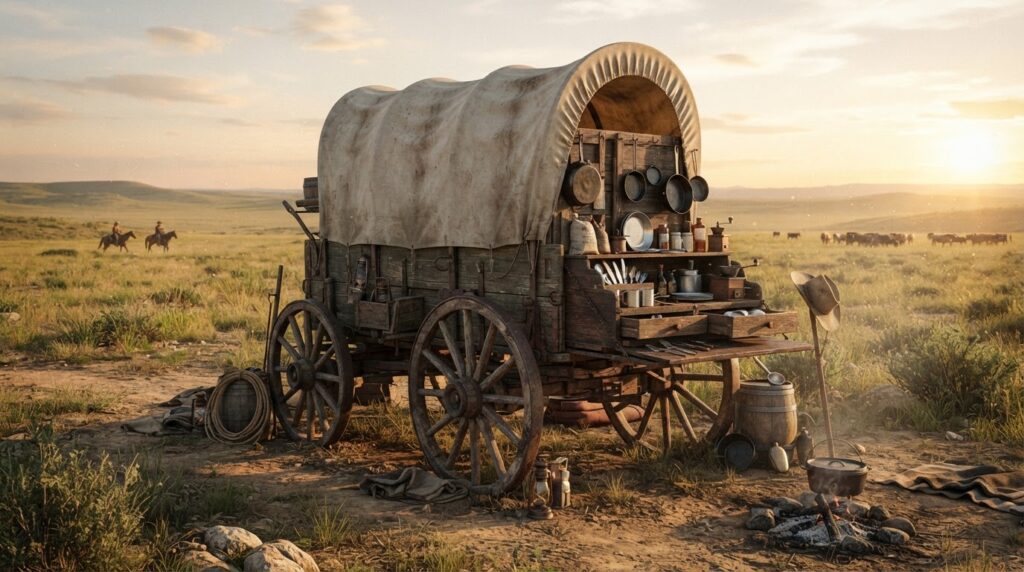
Artist’s 3D recreation depicting an early chuck wagon similar to those used on the great cattle drives of the American frontier. The chuck wagon served as the kitchen, supply wagon, and gathering place for cowboys traveling the trail.
Why Was It Called a Chuck Wagon?
When people think of the American West, they often picture cattle drives, cowboys, and miles of open prairie. Yet one of the most important inventions of the frontier wasn’t a six-shooter or a saddle. It was the Chuck Wagon.
The chuck wagon served as the kitchen, dining room, supply depot, and gathering place for cowboys traveling the long cattle trails. Without it, many cattle drives would have been far more difficult and dangerous.
The chuck wagon was invented in 1866 by Texas cattleman Charles Goodnight during the first great cattle drives following the Civil War. Goodnight recognized that hungry cowboys could not spend months on the trail without a reliable source of food and supplies. To solve the problem, he converted an army surplus Studebaker wagon into a mobile kitchen.
What started as a practical solution soon became one of the most recognizable symbols of the Old West.
Meet Charles Goodnight
A Day on the Trail
Artist’s 3D recreation of a cattle trail camp scene featuring a chuck wagon similar to those developed by Charles Goodnight. From sunrise to sunset, the chuck wagon was the heart of camp life, providing meals, supplies, and a welcome gathering place for hardworking cowboys
Born in Illinois in 1836, Charles Goodnight moved to Texas as a boy and later became a cowboy, Texas Ranger, cattleman, and trailblazer. Along with cattleman Oliver Loving, he established the famous Goodnight-Loving Trail, one of the most important cattle routes in Western history.0
While preparing for those long cattle drives, Goodnight realized a trail crew needed more than horses and determination. The men needed dependable meals, cooking gear, medicine, tools, and supplies.
His answer was the chuck wagon.
By adding a wooden cabinet known as a “chuck box” to the back of a sturdy wagon, along with storage compartments, a water barrel, and space for cooking equipment, Goodnight created a rolling kitchen capable of feeding an entire crew.
Today, he is remembered not only as a ranching pioneer but also as the inventor of the chuck wagon.
The Cowboy Cookie
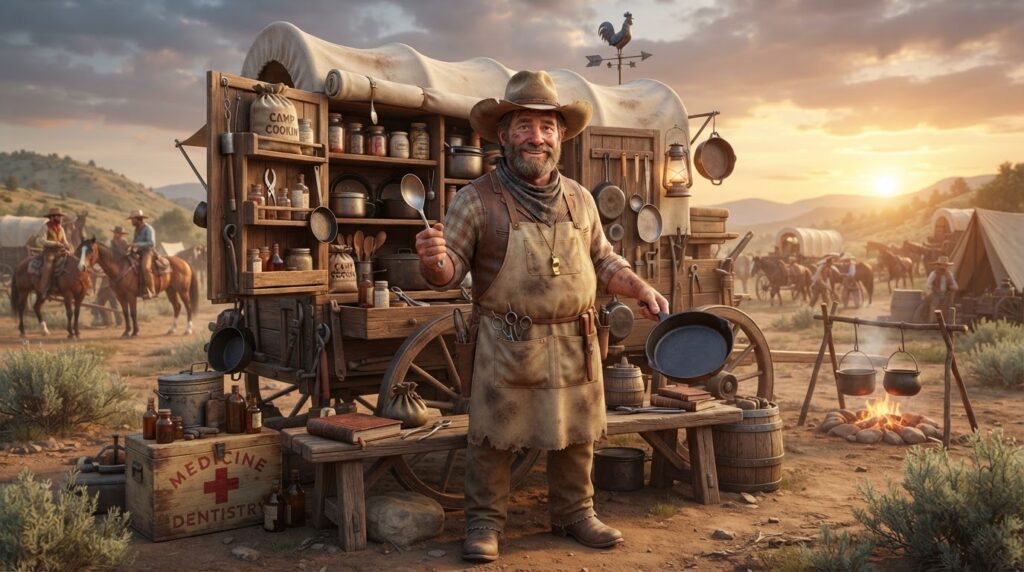
The Trail’s Most Important Cook
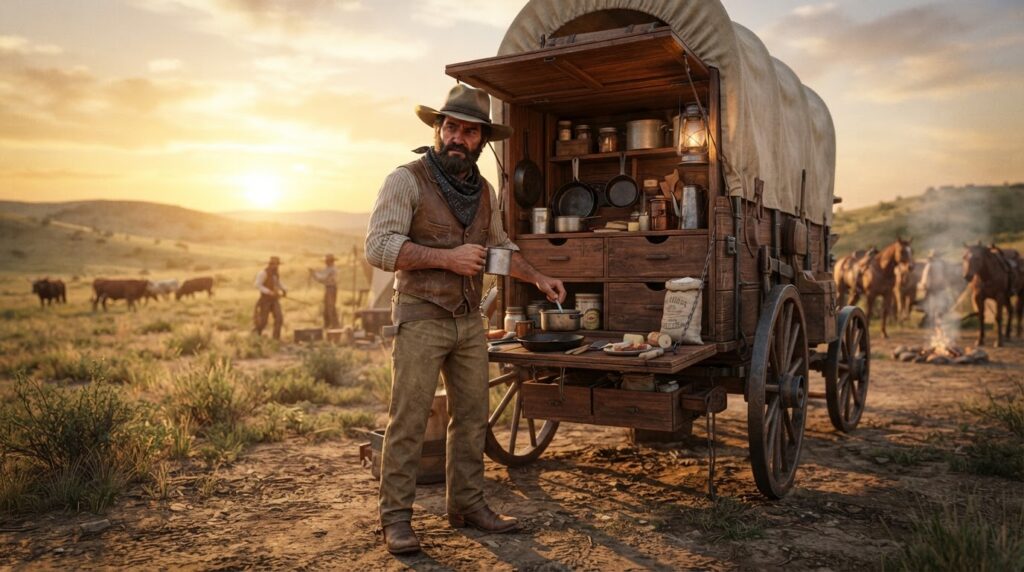
Artist’s 3D recreation depicting a cowboy cook, or “Cookie,” standing beside a chuck wagon during a cattle drive. More than just a cook, Cookie often served as barber, doctor, dentist, banker, counselor, and camp manager. For many cowboys, the chuck wagon cook was second only to the trail boss in importance.
Every chuck wagon had a cook, affectionately known as the “Cookie.”
The Cookie was often the second most important person on the trail, ranking just behind the trail boss. Cowboys knew better than to argue with the cook because he controlled something everybody needed: food.
A good Cookie did far more than prepare meals.
The cook often served as:
Barber
Doctor
Dentist
Banker
Referee
Counselor
Weather watcher
Camp manager
Many trail crews trusted the cook with their money and personal belongings. If disputes arose among cowboys, Cookie often stepped in to settle them.
The cook’s day started before sunrise and ended long after the cowboys had bedded down for the night.
What's Inside a Chuck Wagon?
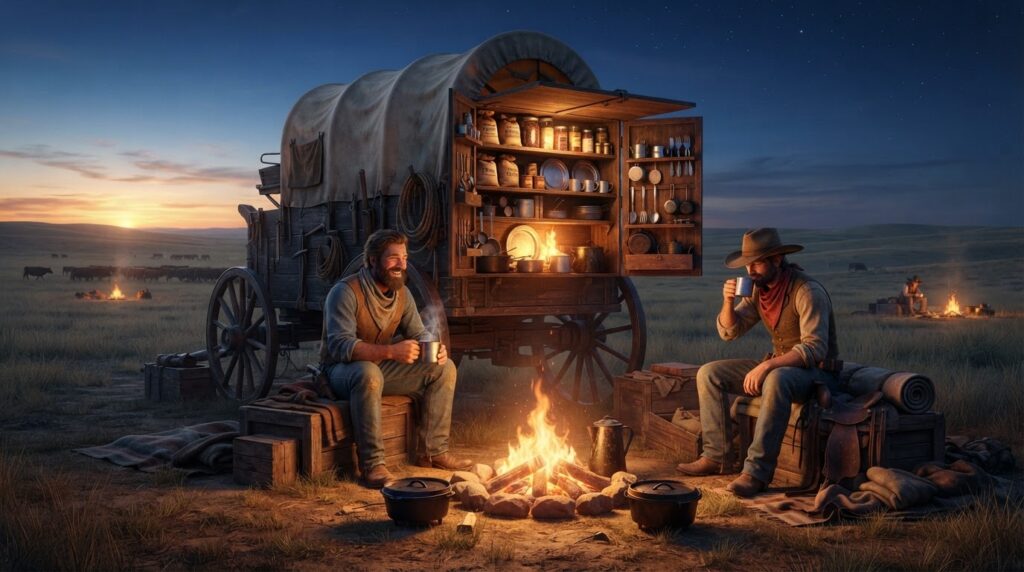
Chuck Around the Campfire
Artist’s 3D recreation depicting cowboys gathered around a chuck wagon at day’s end. Cowboys commonly referred to food as “chuck,” and the wagon that carried the crew’s food, cooking equipment, and supplies became known as the “chuck wagon.” Around the campfire, it was more than a place to eat. It was the heart of trail life.
Cowboys often referred to food as “chuck.”
The wagon that carried the food, cooking utensils, and supplies naturally became known as the “chuck wagon.”
To a cowboy on the trail, the chuck wagon meant comfort, hot coffee, good food, and a chance to rest after a long day in the saddle.
It was more than a wagon.
It was home.
Meals on the Open Range
Cowboy meals were simple, filling, and designed to fuel hard work.
Common trail foods included:
Beans
Biscuits
Salt pork
Bacon
Coffee
Beef
Jerky
Cornbread
Sourdough bread
Coffee was considered essential. Many cowboys drank several cups a day, and a good cup of strong coffee could improve morale during bad weather, long rides, and difficult cattle drives.
One old saying claimed the coffee was strong enough to “float a horseshoe.”
A Lasting Legacy
Although the great cattle drives eventually faded into history, the chuck wagon never disappeared.
Today, chuck wagon cooking competitions, festivals, museums, and living history events continue the tradition started by Charles Goodnight in 1866. Fans of Western history gather across the country to celebrate authentic trail cooking and preserve a unique part of America’s frontier heritage.
More than a century later, the chuck wagon remains a symbol of hard work, ingenuity, fellowship, and the enduring spirit of the American cowboy.
The Heart of the Camp
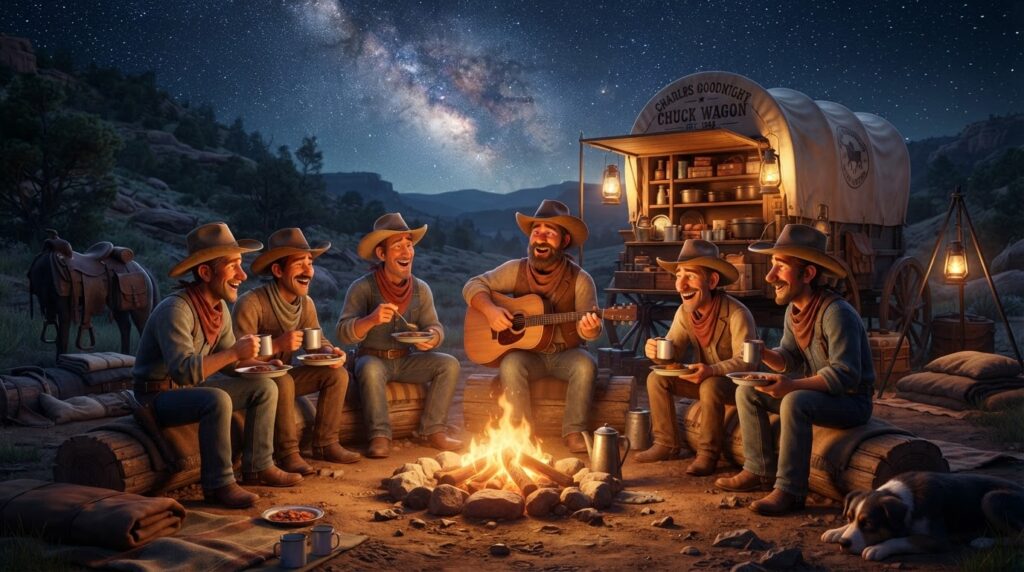
The Heart of the Camp
Artist’s 3D recreation of an evening on the cattle trail. For hungry cowboys, the chuck wagon offered hot meals, strong coffee, good conversation, and a welcome taste of home beneath the western sky.
When the day’s work ended, cowboys naturally gathered around the chuck wagon.
This was where they:
Ate supper
Shared stories
Sang songs
Played practical jokes
Talked about the day’s events
Planned for the next day’s drive